
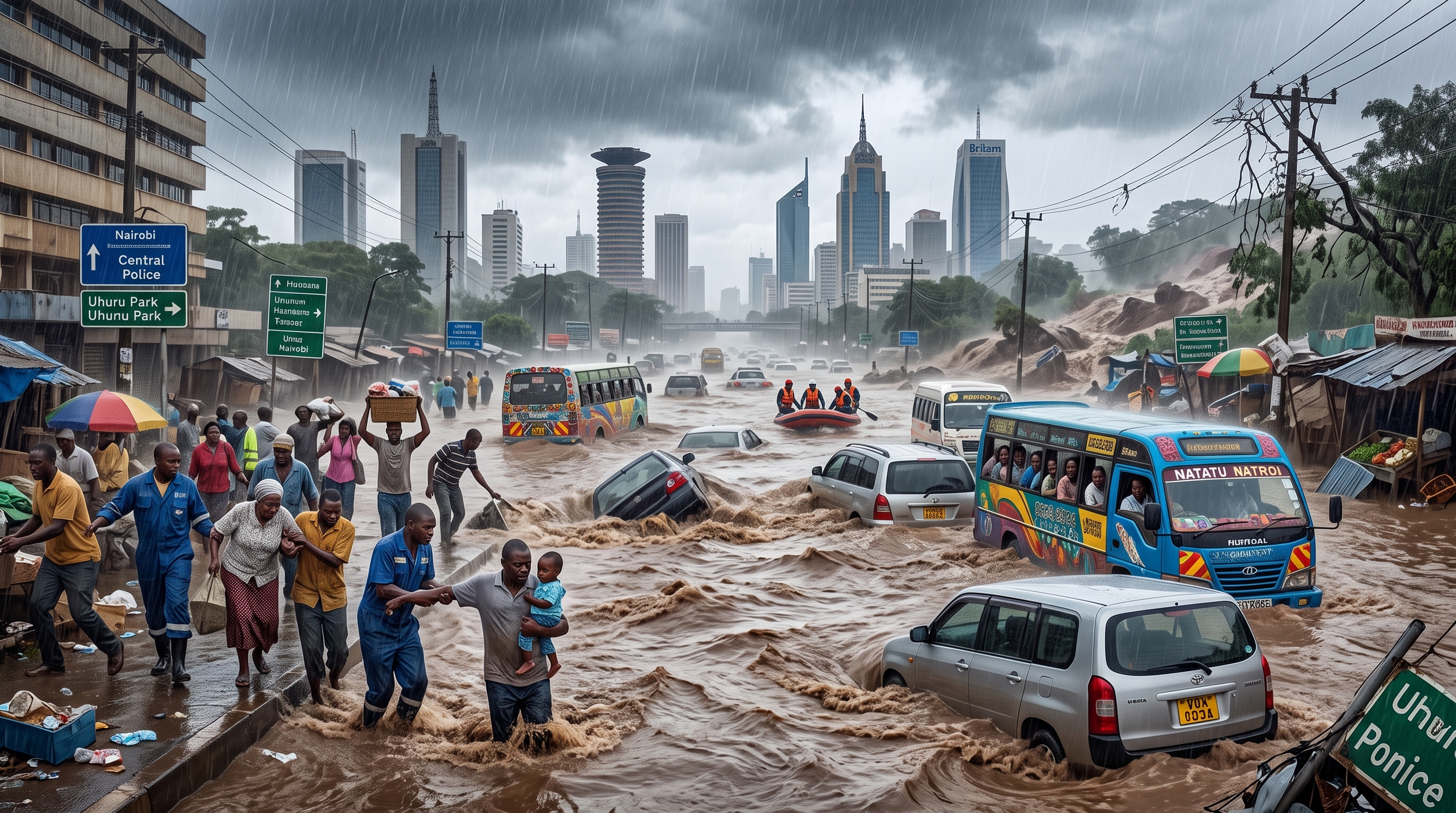
Here are 10 practical ways we can build community resilience before the rains intensify.
1. Identify and Train Community Emergency Volunteers
Every flood-prone community needs a dedicated group of trained local volunteers equipped to handle first response, evacuation, basic first aid, and clear communication.
These volunteers do not replace professional emergency services—they form the crucial first organized link between the community and emergency responders. Local youth and active community members are often best positioned to take on these roles.
2. Assemble Community Rescue Kits
Emergency gear is most effective when it is already on the ground where disaster strikes. Before seasonal rains peak, high-risk communities should gather basic, ready-to-use rescue kits.
These kits should include:
Basic first-aid supplies
Life jackets and sturdy ropes
Torches, whistles, and reflective gear
Waterproof storage containers for vital documents
3. Identify and Prepare Emergency Shelters
Communities must pre-assess and identify secure, accessible structures—such as local schools, churches, faith halls, and civic centres—that can serve as temporary evacuation points.
The vital question isn't just "Where will people go?" but rather "Where will people go, and is that facility actually ready to receive them?" Checking sanitation, structural safety, and access points ahead of time saves lives.
4. Map the Danger Zones
Local knowledge is invaluable when tracking water behavior during heavy downpours. Community leaders, farmers, and elders should collaborate to map out flood-prone homes, vulnerable roads, bridges, drainage channels, and steep slopes prone to mudslides.
This mapped information must be accessible to everyone in the neighborhood so residents know which paths and areas to avoid.
5. Establish Emergency Communication Systems
When a crisis hits, rapid, verified information prevents panic. Establish local contact lists, instant messaging community groups, or designated neighborhood focal points across villages, farming blocks, and estates.
Ensure there is a trusted channel dedicated solely to sharing verified weather alerts and official updates.
6. Teach What to Do—and What NOT to Do
Educate communities on critical safety protocols, including evacuation paths, keeping children safe, and handling lightning or severe storms.
Just as importantly, reinforce life-saving non-negotiables:
Do NOT attempt to walk or swim across fast-moving floodwaters.
Do NOT drive through flooded roads or water of unknown depth.
Do NOT touch fallen electrical wires or power lines.
Do NOT wait until floodwater enters the home to begin evacuating.
7. Map Evacuation Routes and Run Drills
Telling people where to go is only half the job; they must know how to get there safely. Work with local groups to mark clear evacuation paths and conduct simple, practical drills.
When families practice meeting up and volunteers review their assigned areas, a strategy transitions into a reliable response.
8. Make Specific Plans for Vulnerable Households
Disaster response cannot assume that every individual moves or evacuates at the same speed. Communities must map out households requiring additional assistance including elderly residents, people with disabilities, young children, and individuals living alone.
Assign specific volunteers or neighbors to check on and assist these households immediately when an alert sounds.
9. Protect Livelihoods, Not Just Lives
A family’s recovery after the floodwaters recede depends heavily on what they managed to save. Preparedness strategies must include safeguarding economic assets:
Farmers: Relocate livestock to higher ground, secure seeds, protect animal feed, and elevate farm equipment.
Small Business Owners: Plan safe, dry storage for retail stock, key equipment, and financial records.
Protecting tools and assets ensures families do not lose both their homes and their long-term means of survival.
10. Build a Unified Response Team Before the Crisis
Effective climate resilience brings every stakeholder to the table before an emergency happens: local leaders, smallholder farmers, women’s collectives, youth groups, health workers, shopkeepers, local administrators, and emergency services.
When everyone understands their role in advance, the community responds as a coordinated team rather than isolated individuals.
Resilience is Built Before the Crisis
We cannot control when extreme climate cycles or heavy rains arrive, but we have full control over how prepared we are to meet them.
At Spring Agric, we believe that long-term agricultural sustainability and community safety depend on taking action before the storm rolls in.
By organizing, equipping, and training our communities today, we build a safer, more resilient agricultural future for everyone.
Tags: #SpringAgric #ElNiñoPreparedness #CommunityResilience #ClimateResilience #FloodPreparedness #ClimateSmartAgriculture